Chicago Architecture Spotlight: The Wrigley Building
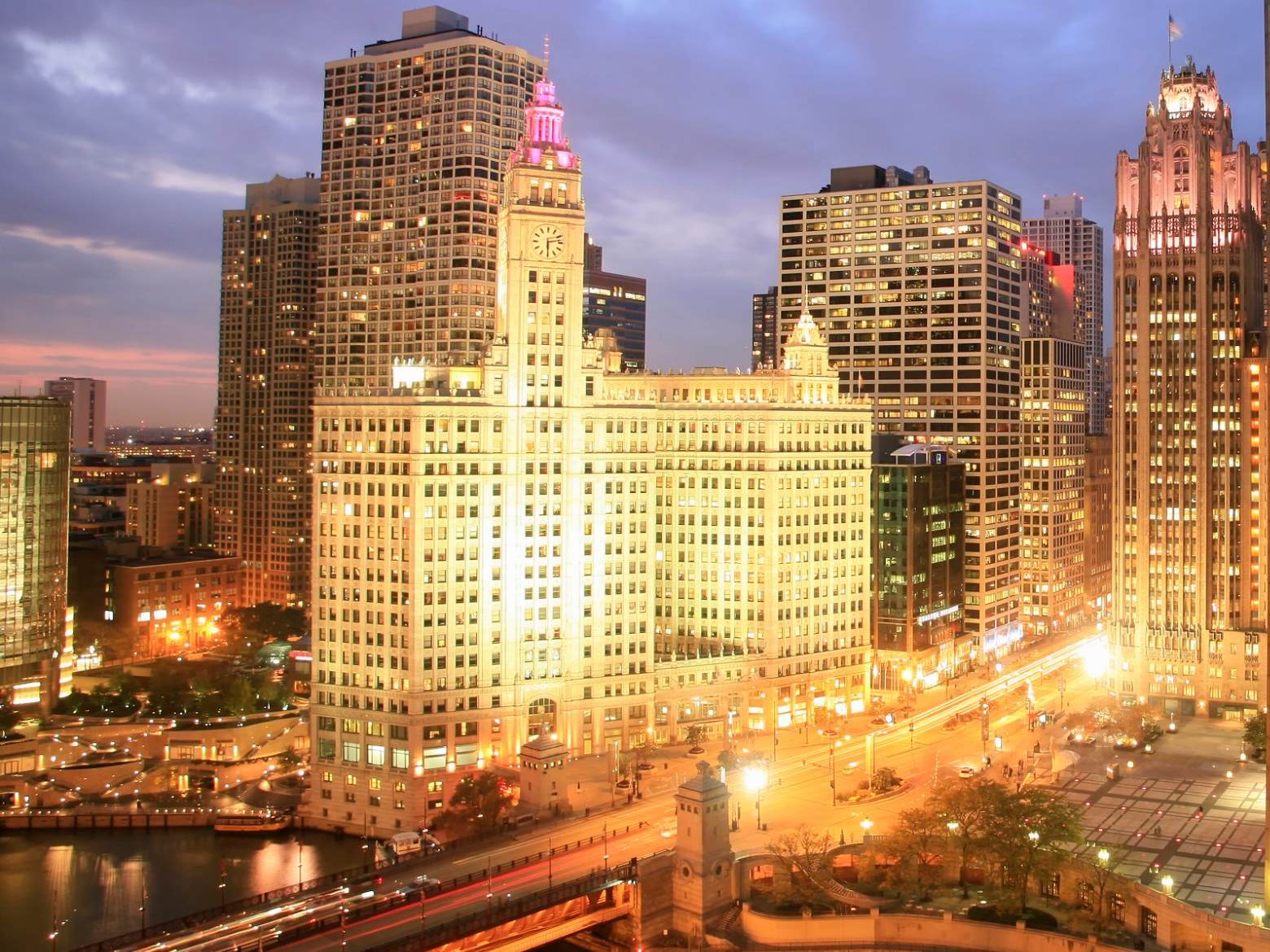
The Wrigley Building is a landmark skyscraper at 400-410 N. Michigan Ave., built as the headquarters of the Wrigley chewing gum company. Designed by Graham, Anderson, Probst & White, it was completed in two phases, with the south tower in 1921 and the north tower in 1924. Known for its gleaming white terra cotta and a clock tower inspired by the Giralda of Seville Cathedral, it was the first major office building north of the Chicago River and helped launch the Magnificent Mile.
Few Chicago buildings are as instantly recognizable as the Wrigley Building. It rises above the bend in the river where Michigan Avenue crosses the water, and for more than a century it has marked the gateway to the Magnificent Mile. This Chicago Architecture Spotlight from Shoreline Sightseeing covers the building’s history, its design, and why the view from the river is one of the best ways to appreciate it.
The Wrigley Building at a Glance
- Landmark
- The Wrigley Building
- Landmark Status
- Designated Chicago Landmark in 2012
- Architect
- Graham, Anderson, Probst & White
- Completed
- South tower 1921, north tower 1924
- Style
- Spanish Colonial Revival or Beaux-Arts, with French Renaissance details
- Address
- 400-410 N. Michigan Ave., Chicago
- Facade
- More than 250,000 glazed terra cotta tiles in six shades of white
- Height
- About 425 feet (south tower)
- Original Use
- Headquarters of the Wrigley chewing gum company
History of the Wrigley Building
A Headquarters Built on Chewing Gum
Chewing gum magnate William Wrigley Jr. chose an oddly shaped lot just north of the Chicago River for his company’s new headquarters. He hired the Chicago firm Graham, Anderson, Probst & White, and the south tower opened in 1921. The building quickly earned the nickname “the house that chewing gum built.”
The Building That Launched the Magnificent Mile
When ground was broken in 1920, there were no major office buildings north of the river, and the Michigan Avenue Bridge was still under construction. Widening Michigan Avenue and bridging the river were key goals of Daniel Burnham and Edward Bennett’s 1909 Plan of Chicago, and the Wrigley Building became the first major commercial structure on the new boulevard. Its success helped spark the development that turned North Michigan Avenue into the Magnificent Mile.
From Gum Headquarters to Chicago Landmark
The first tower was fully leased by the time it was completed, and Wrigley soon commissioned a second, the north tower, which opened in 1924. The Wrigley Company stayed headquartered in the building for about 90 years before selling it in 2011. A major restoration followed, and the building was named a designated Chicago Landmark in 2012. The City of Chicago’s Wrigley Building landmark designation report details its history and significance.
The Wrigley Family and Wrigley Field
The Wrigley name stretches well beyond Michigan Avenue. William Wrigley Jr. also owned the Chicago Cubs, and the team’s North Side ballpark was renamed Wrigley Field in 1926. If you’re planning a trip around a game, here’s how far Wrigley Field is from Lake Michigan and how to pair it with lakefront views.
- 1909
The Plan of Chicago calls for widening Michigan Avenue and bridging the river.
- 1920
Ground is broken north of the river while the Michigan Avenue Bridge is still under construction.
- 1921
The south tower opens.
- 1924
The north tower opens.
- 1926
The Cubs’ ballpark is renamed Wrigley Field.
- 2011
The Wrigley Company sells the building after about 90 years.
- 2012
The building becomes a designated Chicago Landmark.
Wrigley Building Architecture and Design
A Clock Tower Inspired by Seville
The building’s most famous feature is its clock tower, modeled after the Giralda, the bell tower of Seville Cathedral in Spain. The clock has faces pointing in all four directions, each nearly 20 feet across, making the tower easy to spot from the river, the bridge, and up and down Michigan Avenue.
Six Shades of White Terra Cotta
The Wrigley Building’s signature glow comes from more than 250,000 glazed terra cotta tiles. The tiles come in six subtly different shades of white that shift gradually from the base to the top, helping the building stand out against the sky and the river. Look closely and you’ll find ornamental details borrowed from French Renaissance design, including cherubs, eagles, griffins, dragons, and rams.

Designed to Glow at Night
The building’s bright white facade also echoes the “White City” of the 1893 World’s Columbian Exposition in Chicago. The building has been floodlit almost every night since its lights were first switched on in 1921, so it is just as striking after dark as during the day. More than a century later, the illuminated facade is still a signature nighttime sight along the river.

Two Towers, One Landmark
The Wrigley Building is actually two buildings. Although they were completed three years apart, the taller south tower and the 21-story north tower present a unified front to Michigan Avenue. The towers are linked by walkways, including a bridge between the 14th floors added in the early 1930s, with an open plaza between them at street level.
Seeing the Wrigley Building From the Chicago River
The Wrigley Building sits at a bend in the Chicago River, which is why its facade and clock tower have been visible from so far away since the day it opened. From the water, you can take in both towers at once, along with Tribune Tower directly across Michigan Avenue, a pairing that marks the southern gateway to the Magnificent Mile.
- Where it sitsMain branch, at the Michigan Avenue bridge
- Across the streetTribune Tower
- Tour that passes itArchitecture River Tour
- Also offeredSpanish Architecture River Tour

Guests on the Architecture River Tour see the Wrigley Building on the main branch of the river, with a guide sharing the stories behind it and dozens of other landmarks. Spanish-speaking visitors can hear the same history on the Spanish Architecture River Tour. For a closer look at the other buildings along the route, explore the landmarks featured on the Architecture River Tour.
The river view is part of a bigger story. Many of Chicago’s landmarks look completely different from the water, and the Wrigley Building’s scale and riverfront setting come through especially well from below the bridge. It’s also a great example of what makes Chicago architecture famous: ambitious design, new technology, and a building made to be seen.
Fun Fact About the Wrigley Building
The Wrigley Building’s bright white finish wasn’t just an architectural choice. As our guides tell it, it was also a marketing move: the gleaming tower was meant to remind passersby of the fresh, minty feeling of chewing Wrigley’s gum. Keeping it that bright takes care. The terra cotta is fireproof and can withstand extreme heat, but the glazed tiles are delicate enough that they have to be washed by hand.
Visiting the Wrigley Building
The Wrigley Building is a working office and retail building, but you can still get up close. The street-level plaza between the two towers overlooks the river, and the Chicago Riverwalk runs just below. It’s steps from Shoreline Sightseeing’s Michigan Avenue Dock, and there are plenty of things to do near Michigan Avenue to pair with a visit.
Visiting in winter? The Wrigley Building is one of several Chicago buildings that transform for the holidays.
Getting to the Wrigley Building
The Wrigley Building stands at 400-410 N. Michigan Ave., where Michigan Avenue crosses the Chicago River at the south end of the Magnificent Mile.
Best Places to Photograph the Wrigley Building
- DuSable BridgeThe bridge on Michigan Avenue offers a classic angle of both towers and the clock.
- Chicago RiverwalkFrom below, the building rises above you against the sky.
- The river itselfShows the building in its setting alongside Tribune Tower and the bend in the river.
- Day or nightDaylight brings out the detail in the terra cotta, and after dark the floodlit facade takes on a completely different look.
See the Wrigley Building on a Chicago Architecture River Tour
The Wrigley Building has marked the gateway to the Magnificent Mile for more than a century, and the river is where its story comes together. Join Shoreline Sightseeing on the Architecture River Tour to see the Wrigley Building, Tribune Tower, and dozens of other Chicago landmarks from the water, with a guide who shares the history behind each one.
Frequently Asked Questions
What is the Wrigley Building?
The Wrigley Building is a landmark skyscraper at 400-410 N. Michigan Ave. in Chicago, built as the headquarters of the Wrigley chewing gum company. Known for its white terra cotta facade and clock tower, it sits where Michigan Avenue crosses the Chicago River at the south end of the Magnificent Mile.
When was the Wrigley Building built?
The Wrigley Building was built in two phases. The south tower was completed in 1921, and the north tower was completed in 1924.
Who designed the Wrigley Building?
The Wrigley Building was designed by Graham, Anderson, Probst & White, the Chicago architecture firm also behind the Merchandise Mart.
What architectural style is the Wrigley Building?
The Wrigley Building is commonly described as Spanish Colonial Revival, while the City of Chicago’s landmark designation report classifies it as Beaux-Arts. Either way, the building features French Renaissance ornamental details and a clock tower modeled after the Giralda, the bell tower of Seville Cathedral in Spain.
Why is the Wrigley Building white?
The facade is clad in more than 250,000 glazed terra cotta tiles in six subtly different shades of white. The bright finish echoes the White City of the 1893 World’s Columbian Exposition and was designed to glow under floodlights at night. Shoreline guides also share a marketing angle: the gleaming white was meant to evoke the minty freshness of Wrigley’s gum.
How tall is the Wrigley Building?
The Wrigley Building’s south tower rises about 425 feet, and the north tower stands 21 stories tall.
Can you go inside the Wrigley Building?
The Wrigley Building is a working office and retail building, but visitors can walk through the street-level plaza between the two towers, which overlooks the Chicago River.
Is the Wrigley Building a Chicago landmark?
Yes. The Wrigley Building became a designated Chicago Landmark in 2012.
Can you see the Wrigley Building on a boat tour?
Yes. The Wrigley Building is featured on the Architecture River Tour, where guests see it on the main branch of the Chicago River at the Michigan Avenue bridge, along with Tribune Tower across the street.
What building is across from the Wrigley Building?
Tribune Tower stands directly across Michigan Avenue from the Wrigley Building. Together, the two landmarks mark the southern gateway to the Magnificent Mile at the Chicago River.
Is the Wrigley Building connected to Wrigley Field?
Both are tied to the Wrigley family. William Wrigley Jr. built the Wrigley Building as his gum company’s headquarters and also owned the Chicago Cubs, whose ballpark was renamed Wrigley Field in 1926.
Where is the best place to photograph the Wrigley Building?
Popular spots include the DuSable Bridge on Michigan Avenue, the Chicago Riverwalk, and the river itself, where you can capture the building alongside Tribune Tower. Daylight shows the terra cotta detail, while the floodlit facade stands out after dark.
Why is the Wrigley Building lit up at night?
The Wrigley Building has been floodlit almost every night since its lights were first switched on in 1921, so its white terra cotta facade is just as striking after dark. It’s also one of several Chicago buildings that take on a festive look during the holidays.