Chicago Architecture Spotlight: The Leo Burnett Building
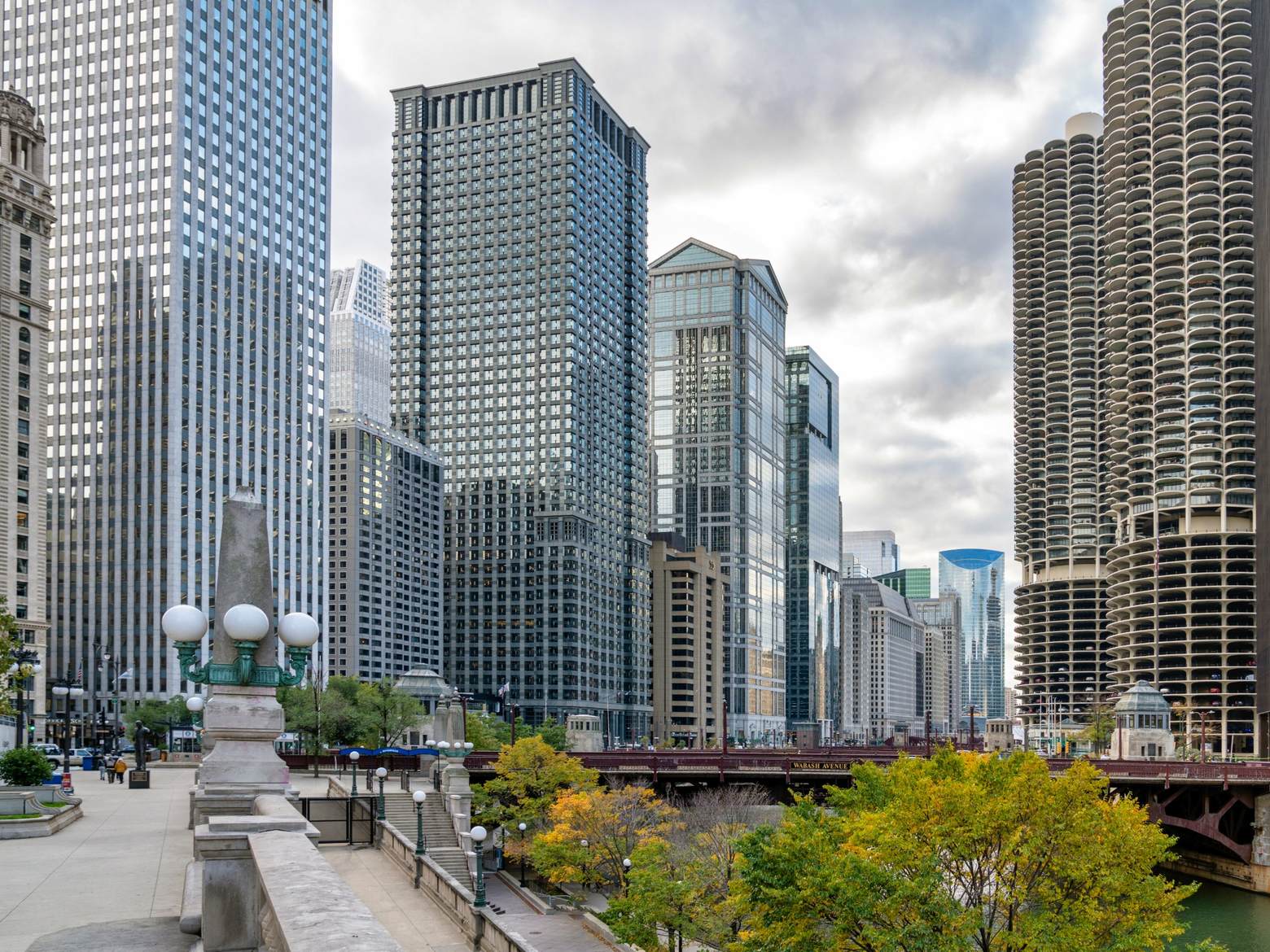
The Leo Burnett Building is a postmodern skyscraper at 35 W. Wacker Dr., on the south bank of the Chicago River at Dearborn Street. Completed in 1989, it was designed by Kevin Roche John Dinkeloo & Associates with Shaw & Associates as the headquarters of the Leo Burnett advertising agency, the Chicago firm behind characters like Tony the Tiger and the Pillsbury Doughboy. The tower rises about 635 feet and is known for its dark green granite facade and window grid inspired by the Chicago School.
From the river, the Leo Burnett Building stands out for its dark, stately facade and strong vertical lines. It was built for one of the most famous names in advertising, and its design connects 1980s postmodernism with Chicago’s architectural past. This Chicago Architecture Spotlight from Shoreline Sightseeing covers the building’s history, its design, and what to look for when you see it from the water.
The Leo Burnett Building at a Glance
- Landmark
- The Leo Burnett Building
- Completed
- 1989
- Architect
- Kevin Roche John Dinkeloo & Associates with Shaw & Associates
- Developer
- The John Buck Company
- Style
- Postmodern, with Chicago School influences
- Address
- 35 W. Wacker Dr., Chicago
- Height
- About 635 feet, commonly listed as 50 stories
- Original Use
- Headquarters of the Leo Burnett advertising agency
- Facade
- Dark green granite with stainless steel window dividers
History of the Leo Burnett Building
Built for an Advertising Legend
Leo Burnett founded his advertising agency in Chicago in 1935, and it grew into one of the best-known agencies in the world. The firm created some of the most familiar characters in American advertising, including Tony the Tiger, the Pillsbury Doughboy, and the Keebler Elves. By the 1980s, the agency needed a headquarters that matched its reputation, and developer The John Buck Company brought in Kevin Roche John Dinkeloo & Associates to design it in 1986.
A Pritzker Prize Winner on the Riverfront
Architect Kevin Roche, winner of the 1982 Pritzker Prize, was already known for landmark museums and corporate headquarters, including New York’s Ford Foundation building. The brief called for a building that felt of its time while carrying on the tradition of the great Chicago skyscrapers that came before it. The result, completed in 1989, favors restraint over flash, with a solid, carefully detailed presence on the river. It arrived during a wave of postmodern towers along Wacker Drive that also included 77 W. Wacker just to the west.
The Leo Burnett Building Today
The tower has long been home to the Leo Burnett agency, which is part of Publicis Groupe. In recent years, Publicis merged Leo Burnett with Publicis Worldwide under the name Leo. The building has also housed other major tenants, including the law firm Winston & Strawn. It sold in 2022 for a reported $420 million, and it’s still widely known by the agency’s name.
- 1935
Leo Burnett founds his advertising agency in Chicago.
- 1986
The John Buck Company brings in Kevin Roche John Dinkeloo & Associates to design the headquarters.
- 1989
The tower is completed at 35 W. Wacker Dr.
- 2022
The building sells for a reported $420 million.
Leo Burnett Building Architecture and Design
A Postmodern Tower With Chicago School Roots
The Leo Burnett Building is a postmodern design, but it borrows heavily from Chicago’s architectural history. Its windows are divided by vertical stainless steel bars, a nod to the “Chicago windows” made famous by the Chicago School architects of the late 1800s. That connection is part of what makes Chicago architecture famous: new buildings that build on the city’s past instead of ignoring it.
Dark Green Granite in Three Finishes
The facade is clad in green granite in three different finishes, thermal stippled, honed, and polished, which gives the dark stone a distinct, almost pixelated texture and subtle variations in shine. The granite forms a rectangular grid around deeply recessed windows, creating strong shadows and a sense of depth, especially in changing light.

Corners Designed for Executive Offices
One of the building’s most practical design choices is at its corners. They were shaped to create additional executive office space, a detail that also strengthens the overall look of the tower. It’s a fitting feature for a building designed around the needs of a major company headquarters.
The Structure Behind the Granite
Beneath the granite, the tower uses a perimeter tube of steel columns spaced 15 feet apart, combined with a poured concrete core and trusses supporting the floors. This tube approach, rooted in Chicago’s long history of skyscraper engineering, supports the building’s height behind its stone-clad exterior.
Inside the Lobby
The design carries inside as well. The lobby walls are clad in Rosa Portugala marble and pine-green African granite, continuing the rich stone palette of the exterior.
Seeing the Leo Burnett Building From the Chicago River
The Leo Burnett Building rises from the south bank of the main branch of the Chicago River at Dearborn Street. From the water, you can take in its full height and see how its dark granite stands apart from its neighbors along Wacker Drive, from the concrete of 55 W. Wacker to the classical columns of 77 W. Wacker. Across the river stands Marina City, whose famous corncob towers make a memorable contrast with the Leo Burnett Building’s solid granite form.
- Where it sitsSouth bank of the main branch, at Dearborn Street
- Across the riverMarina City
- Wacker Drive neighbors55 W. Wacker and 77 W. Wacker
- Tour that passes itArchitecture River Tour

Guests on the Architecture River Tour see the Leo Burnett Building on the main branch, with a guide sharing the stories behind it and dozens of other landmarks. Spanish-speaking visitors can hear the same history on the Spanish Architecture River Tour. For a closer look at the other buildings along the route, explore the landmarks featured on the Architecture River Tour.
Like many of Chicago’s landmarks that look completely different from the water, the Leo Burnett Building is especially rewarding from river level, where its scale and texture come through in a way that’s hard to see from the sidewalk. A few blocks east, where Michigan Avenue crosses the river, the history and design of the Wrigley Building tell another chapter of the city’s architectural story.

Fun Fact About the Leo Burnett Building
Leo Burnett was known for the philosophy that “big ideas come from big pencils,” and oversized black pencils became a signature of the agency. That idea is built into its Chicago headquarters, too. The building itself is conceptually shaped like Leo Burnett’s famous thick black pencil, and inside the agency’s offices, the black pencil motif is part of the workspace design.
Visiting the Leo Burnett Building
The Leo Burnett Building is a working office building, so most of it isn’t open to the public. The best views are from outside, and the Chicago Riverwalk below Wacker Drive lets you step back and take in the full facade. The building is part of the Chicago Pedway, the downtown walkway network that also serves the neighboring Renaissance Hotel, a handy detail for getting around in colder months.
Getting to the Leo Burnett Building
The Leo Burnett Building stands at 35 W. Wacker Dr., on the south bank of the Chicago River at Dearborn Street.
Best Places to Photograph the Leo Burnett Building
- Chicago RiverwalkClear views of the building from across and along the river.
- Dearborn Street and State Street bridgesGood angles looking up at the tower.
- The river itselfShows the building in context with its Wacker Drive neighbors and Marina City across the water.
- Changing lightBrings out the texture of the granite, so the building can look noticeably different from one visit to the next.
See the Leo Burnett Building on a Chicago Architecture River Tour
The Leo Burnett Building connects Chicago’s advertising history with its architectural legacy, and a river tour brings both into view. Join Shoreline Sightseeing on the Architecture River Tour to see the Leo Burnett Building, Marina City, and dozens of other Chicago landmarks from the water, with a guide who shares the history behind each one.
Frequently Asked Questions
What is the Leo Burnett Building?
The Leo Burnett Building is a postmodern skyscraper at 35 W. Wacker Dr. in Chicago, built as the headquarters of the Leo Burnett advertising agency. It sits on the south bank of the Chicago River at Dearborn Street.
When was the Leo Burnett Building built?
Design began in 1986, and the Leo Burnett Building was completed in 1989.
Who designed the Leo Burnett Building?
The Leo Burnett Building was designed by Kevin Roche John Dinkeloo & Associates with Shaw & Associates. Kevin Roche was a Pritzker Prize-winning architect.
What architectural style is the Leo Burnett Building?
The Leo Burnett Building is a postmodern design with Chicago School influences, including windows divided by stainless steel bars that echo the classic “Chicago windows” of the late 1800s.
How tall is the Leo Burnett Building?
The Leo Burnett Building rises about 635 feet and is commonly listed as 50 stories.
What is the Leo Burnett Building made of?
The facade is clad in dark green granite in three finishes, thermal stippled, honed, and polished, with stainless steel window dividers. The structure uses a perimeter tube of steel columns and a poured concrete core.
What is inside the Leo Burnett Building?
The Leo Burnett Building is primarily office space, with a lobby clad in Rosa Portugala marble and pine-green African granite. It is also part of the Chicago Pedway, the downtown walkway network that also serves the neighboring Renaissance Hotel.
Why is it called the Leo Burnett Building?
The building was developed as the headquarters of the Leo Burnett advertising agency, founded in Chicago by Leo Burnett in 1935. Publicis Groupe has since merged Leo Burnett with Publicis Worldwide under the name Leo, but the building is still widely known by its original name.
Is the Leo Burnett Building shaped like a pencil?
The Leo Burnett Building is conceptually shaped like Leo Burnett’s famous thick black pencil, a signature of the agency. Inside the agency’s offices, the black pencil motif is also part of the workspace design.
What famous ads did Leo Burnett create?
The Leo Burnett agency created some of the most recognizable characters in American advertising, including Tony the Tiger, the Pillsbury Doughboy, and the Keebler Elves.
Can you go inside the Leo Burnett Building?
The Leo Burnett Building is a working office building, so most of it isn’t open to the public. The best views are from outside, especially from the Chicago Riverwalk and the river itself.
Can you see the Leo Burnett Building on a boat tour?
Yes. The Leo Burnett Building is featured on the Architecture River Tour, where guests see it on the main branch of the Chicago River along Wacker Drive, across from Marina City.
What building is across the river from the Leo Burnett Building?
Marina City, with its distinctive corncob-shaped towers, stands across the Chicago River from the Leo Burnett Building.
Where is the best place to photograph the Leo Burnett Building?
Popular spots include the Chicago Riverwalk, the Dearborn Street and State Street bridges, and the river itself, where you can capture the building alongside its Wacker Drive neighbors and Marina City.